
Professional Case Study
Brand Onboarding Platform
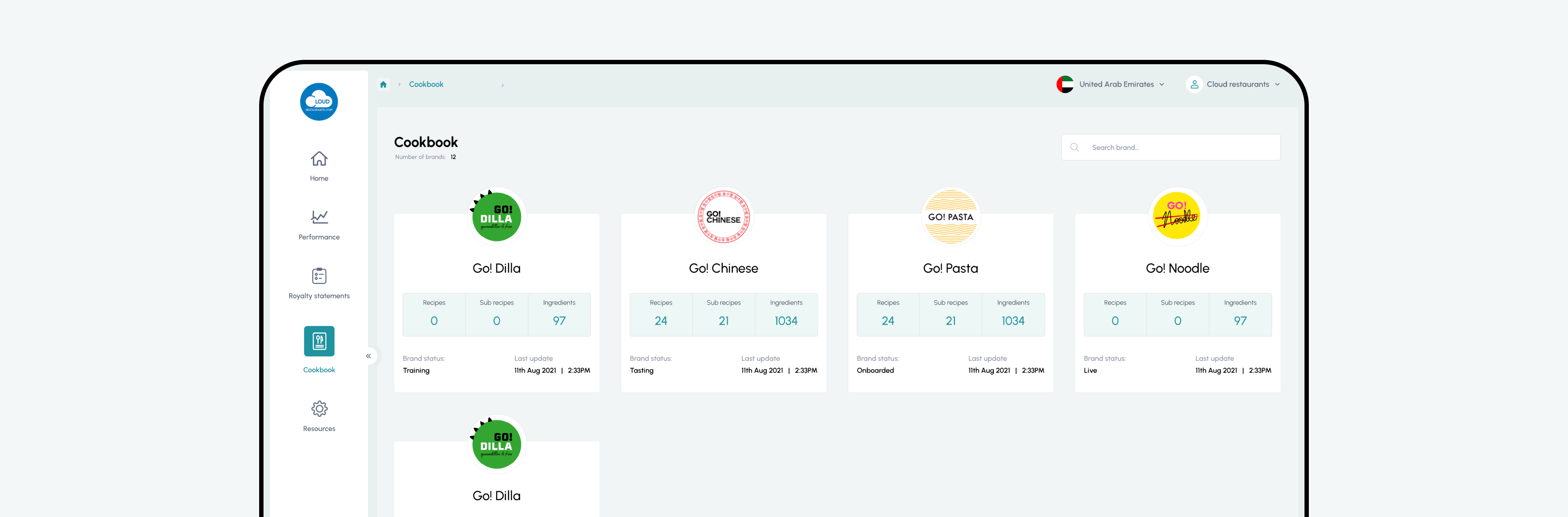
Led the end-to-end design of an enterprise brand/restaurant operations platform. It centralized fragmented workflows for culinary, operations, and brand teams. Enabling standardized recipe management, improved workflow visibility, and more consistent execution across distributed kitchen environments.
Role
Senior Product Designer
Timeline
~3 months
Read time
4 mins
Case study format
Short-Mid format UX
Team members
1 Visual Designer · 1 Product Manager · 4 Engineers · 2 Culinary Teams · 2 Restaurant Stakeholders · 1 Architect · 2 QA Engineers
Hi there 👋🏼
The case study highlights selected workflows and key design decisions to showcase my design thinking process. Additional journey flows and deeper explorations will be presented during the interview discussion.
Business & Operational Context
Kitopi operated a rapidly scaling cloud kitchen platform supporting multiple restaurant brands across distributed kitchen environments. As operations expanded across brands and locations, maintaining consistency across recipes, workflows, and kitchen execution became increasingly complex.
Recipes evolved beyond static culinary references into operational systems that influenced onboarding, execution reliability, cross-functional coordination, and day-to-day operational efficiency across restaurant teams.
Objective: Improve recipe management
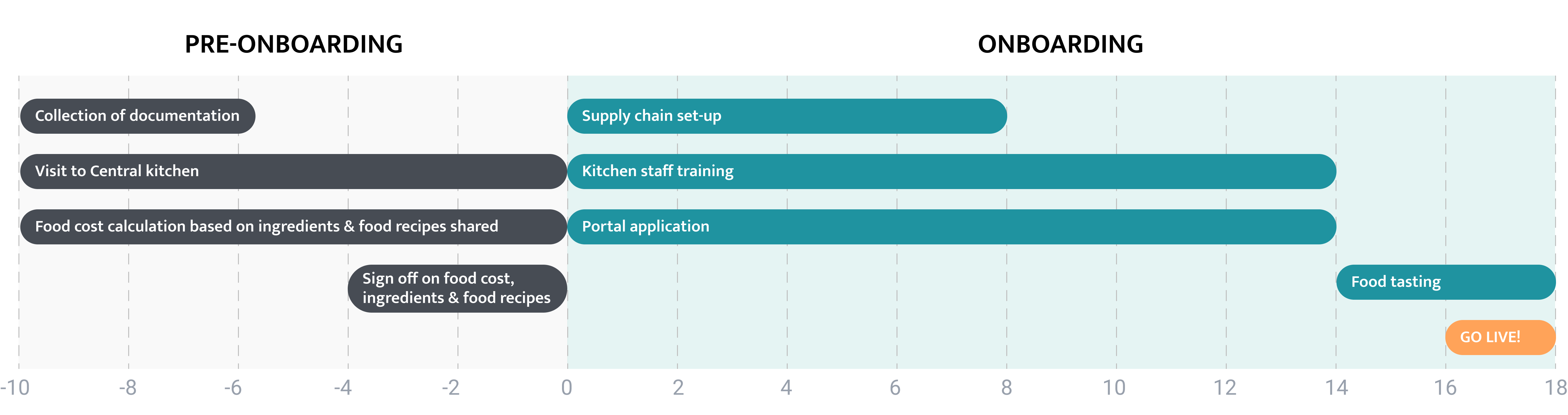
28+ days to 14 days
Key result: Time to onboard the new brand recipes for new brand onboarding
15 days to 5 days
Key result: Reduce time to add a new recipe for existing brands (N/a)
26% to 25%
Key result: Reduce Theoretical FCR - On Demand (N/a)
The Challenge
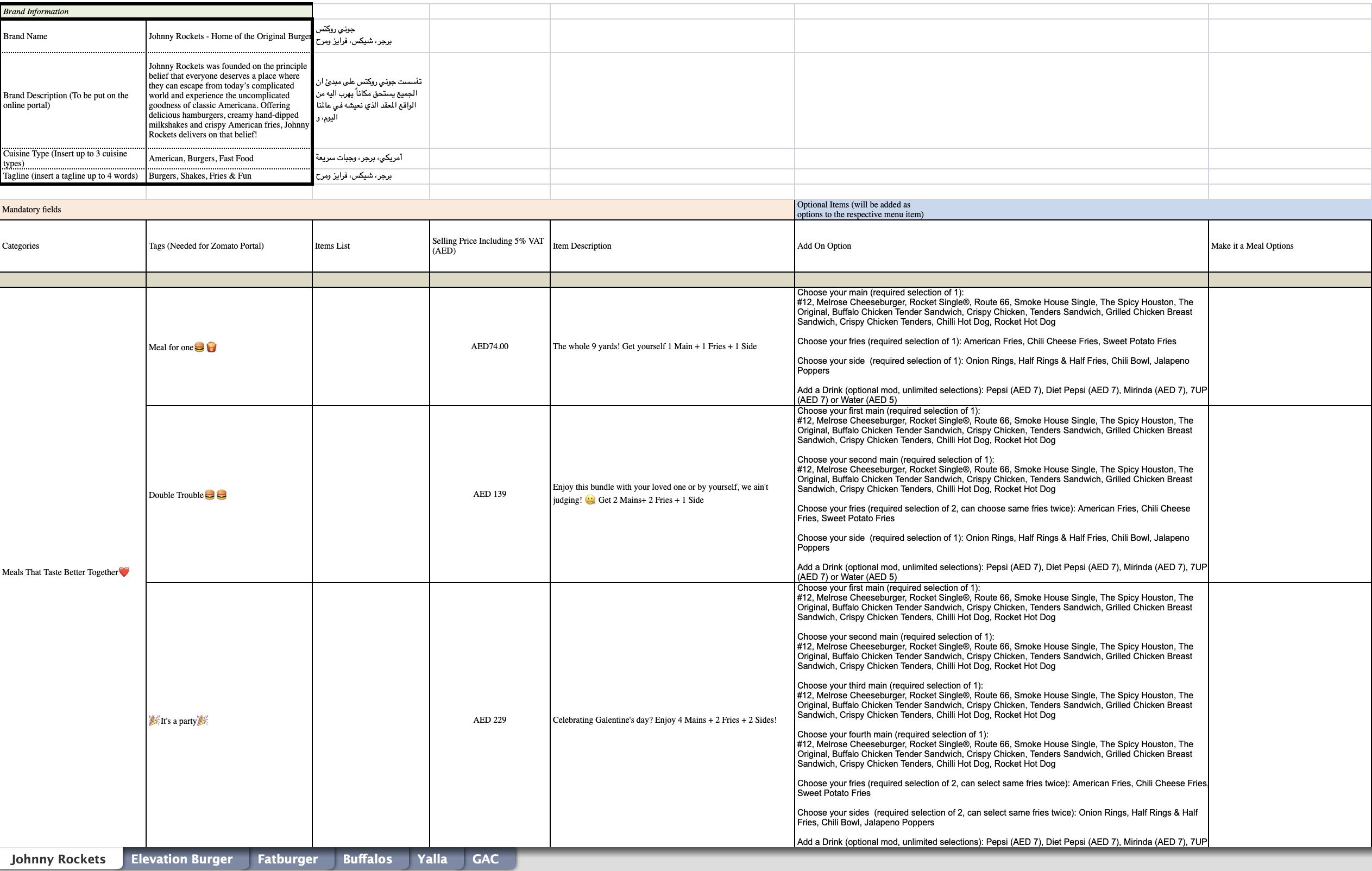
Recipe operations relied heavily on fragmented spreadsheets, disconnected documentation, and manual coordination between internal teams and restaurant partners.
This created operational inefficiencies across onboarding, publishing, and kitchen execution workflows.
Brand Managers
Fragmented menu management created inconsistencies across brand information and approvals
Culinary & Kitchen Teams
Recipe creation and execution workflows lacked structure and operational guidance, creating ambiguity during high-frequency kitchen operations.
Leadership & Business Operations
Disconnected systems and fragmented documentation reduced operational scalability and consistency
Operations Teams
Inaccurate recipe data and limited visibility created operational inefficiencies across workflows, led to slowing updates across teams.
Discovery & Research
I collaborated with cross-functional teams to identify inefficiencies in existing spreadsheet-based onboarding and recipe management workflows.
| Problem areas | Data insights |
|---|---|
| Incorrect Mapping & Missing Information | Up to 15% of ingredients had incorrect quantity measurements |
| Up to 10% of recipes had missing packaging information | |
| Missing image, missing tags or other incorrect details because of excel sheet mismatch | |
| Time-Consuming Processes | Ingredient validation with brand owners took 1–3 weeks |
| Teams relied heavily on back-and-forth communication to gather approvals and operational documentation | |
| Fragmented workflows slowed onboarding and operational rollout | |
| Adherence to brand standards and food quality incidents | <70% adherence to brand standards, process not followed during recipe cooking |
| 50% food quality issues due to presentation & freshness : Poor customer experience | |
| Manual intervention in training and expansion to new regions |
Research insights
| User | Research insights |
|---|---|
| Brand Managers, Brand Owner | Limited visibility into onboarding progress and Food Cost Ratio (FCR) after launch |
| Heavy reliance on manual coordination and fragmented documentation | |
| Culinary Teams | Recipe workflows lacked structure, causing inconsistencies during execution |
| Operations Teams | Publishing and rollout workflows were difficult to track across brands, regions |
| Supply Chain Teams | Ingredient approvals required manual validation, slowing recipe onboarding |
Cross-Functional Collaboration
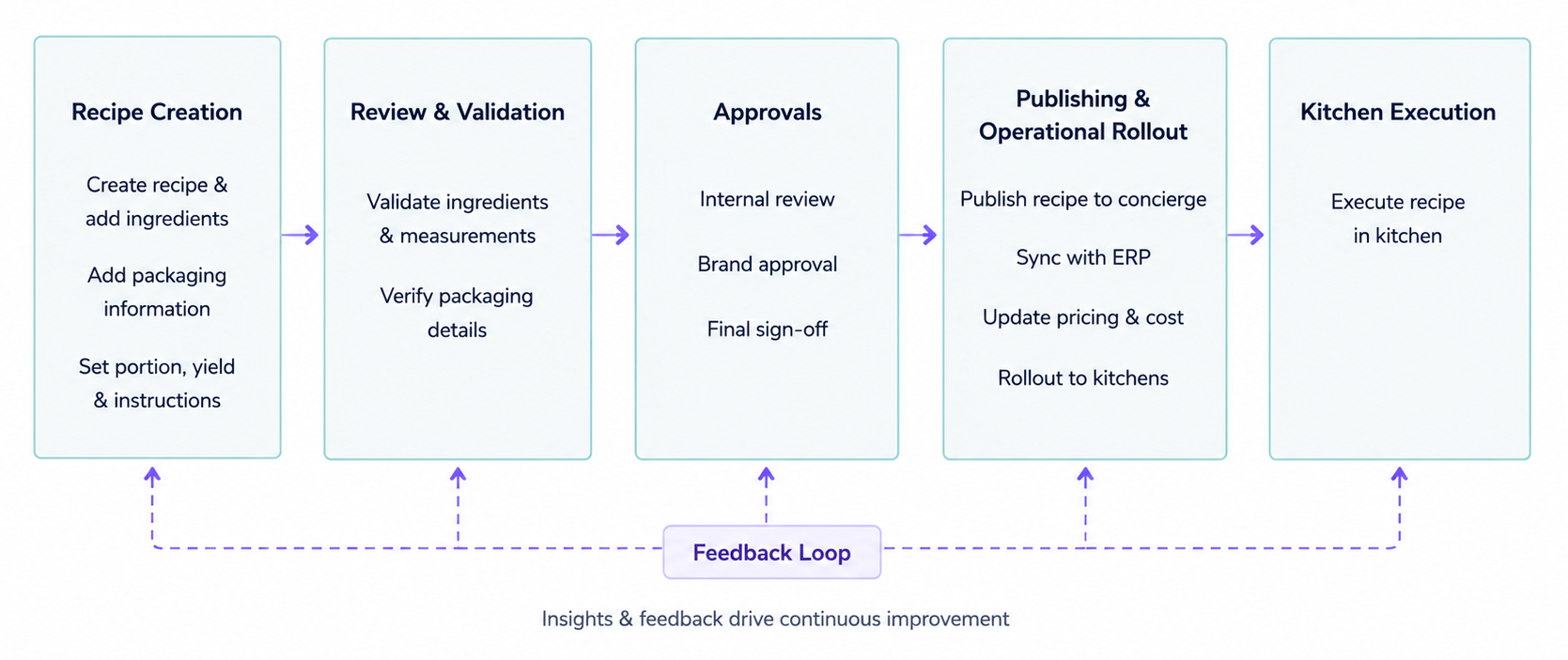
The platform required close collaboration across Brand Management, Culinary, Operations, Supply Chain, and Customer Success teams because recipe workflows impacted multiple downstream operational systems.
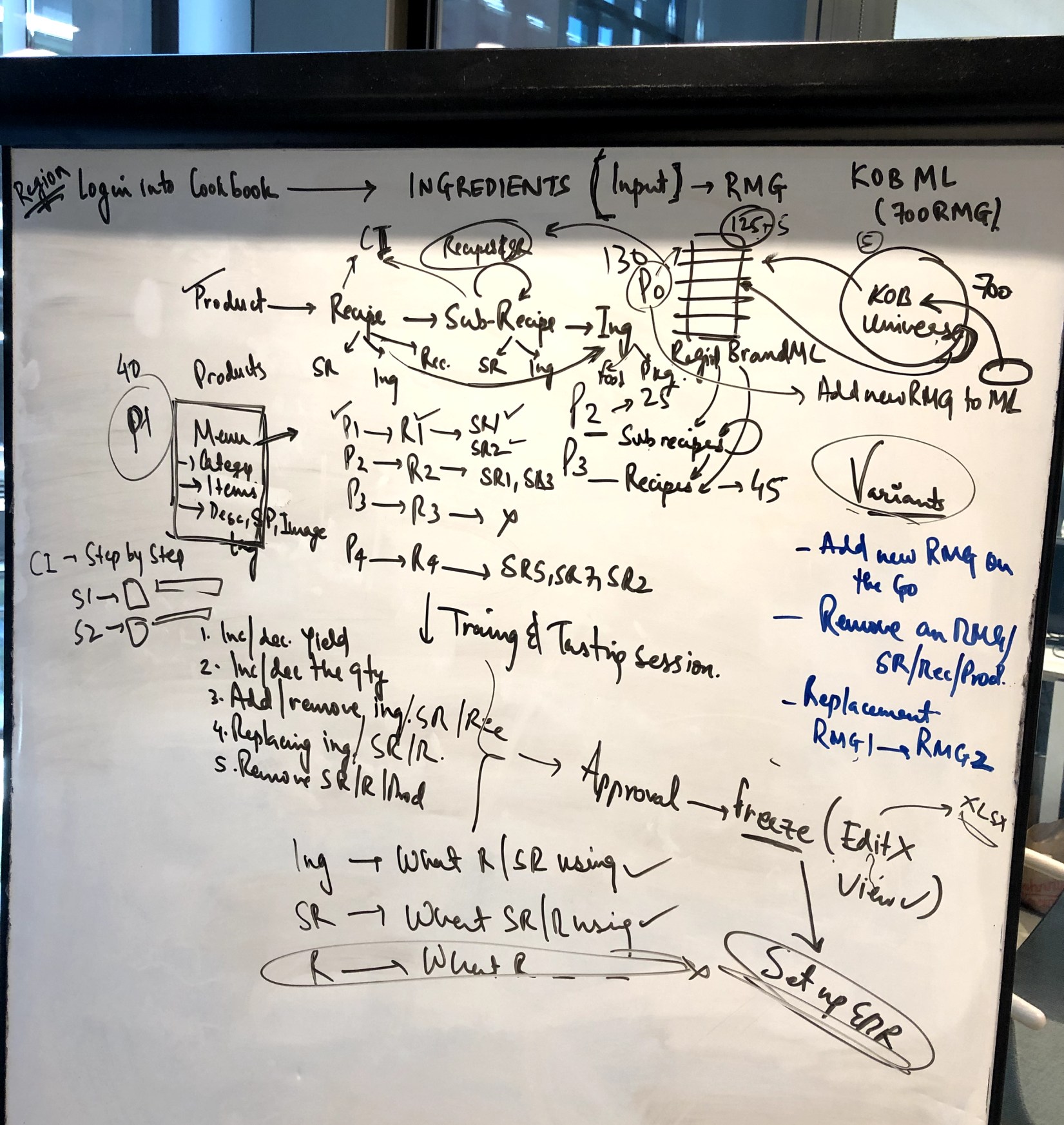
This revealed opportunities to help identify bottlenecks across:
- Recipe creation
- Review and approvals
- Publishing workflows
- Operational rollout
- Maintain food quality & match brand standards
Problem statements
- Brand Managers had visibility into Food Cost Ratio (FCR) only during onboarding at a recipe level, with limited visibility once the brand went live, costing both Kitopi and our brands operational profitability over time and tracking was difficult because of mismatched data sets.
- Inconsistent adherence to brand standards during food preparation led to variations in food quality and impacted customer experience.
Design Principles
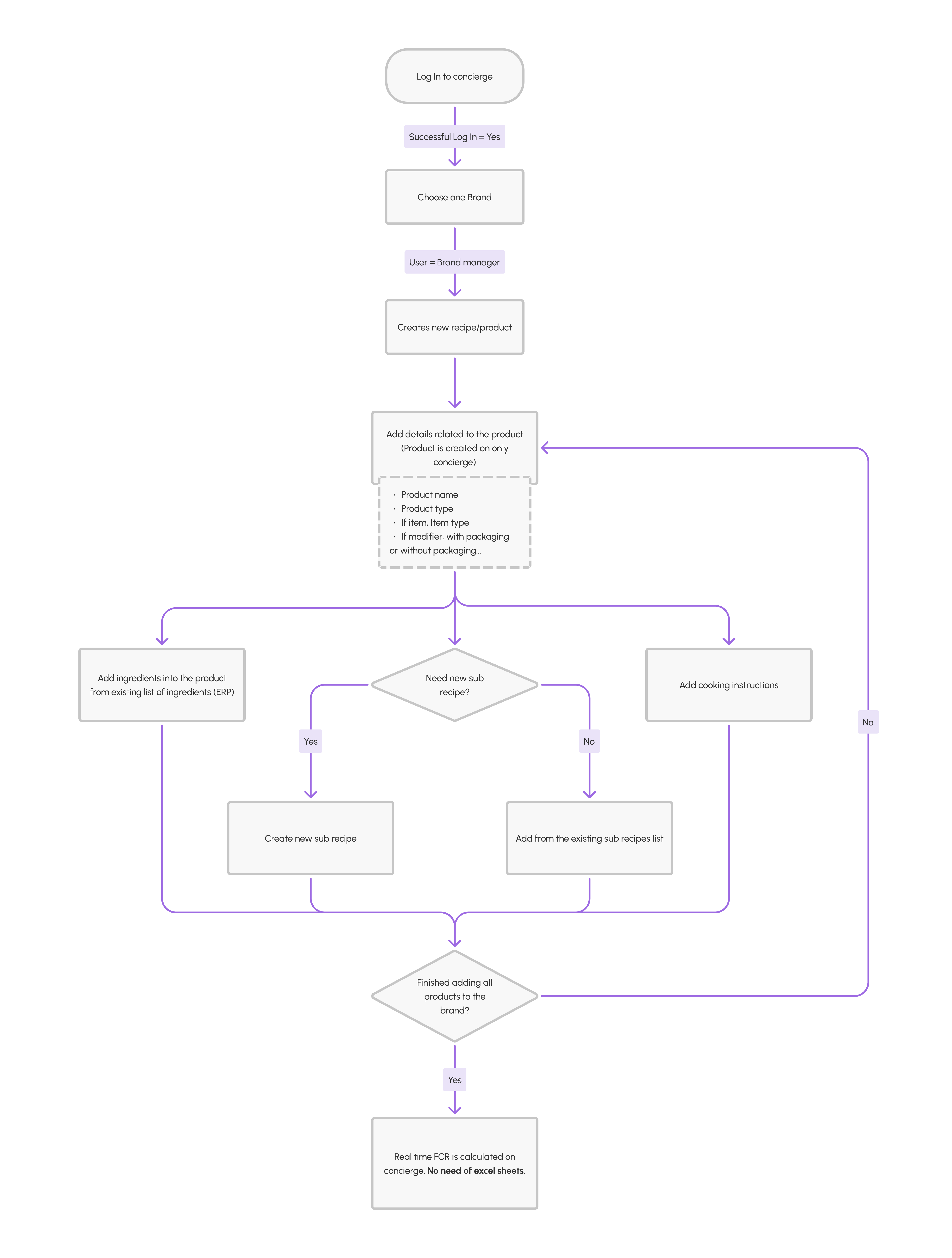
The platform improved recipe accuracy by enabling creation with supply-chain-approved ingredients only. Centralized workflows gave stakeholders & ops easier access to operational data, while we optimized Food Cost Ratio (FCR) with real-time ingredients from ERP and reduce onboarding bottlenecks and inconsistencies.
01
Build Trust Through Validated Data
02
Improve Accessibility & Operational Efficiency
03
Design for Scalable Operations
Key design decisions
| Problem | Design decision |
|---|---|
| Flexible inputs created onboarding errors and inconsistent recipe data | Enabled structured recipe creation, validation, and publishing workflows |
| Recipe workflows were fragmented across spreadsheets, PDFs, and disconnected systems | Unified recipe creation, approvals, packaging, and operational rollout in one platform |
| Teams relied heavily on spreadsheet workflows during onboarding and recipe management | Reduced learning friction and improved usability for high-frequency operational tasks based on spreadsheet mental model for MVP |
| Brand Managers lacked visibility into ingredient dependencies and Food Cost Ratio (FCR) | Enabled real-time ingredient updates and operational costing visibility during onboarding |
Journey explorations
New brand onboarding
100%Proposed Systems Workflow
Brand onboarding user flow
Design Explorations
View product list journey
100%The final prototype
Focused on onboarding, recipe management, publishing, and operational workflows into a connected experience that could be tested across cross-functional restaurant operations teams.
Solved for:
- Structured ingredient validation
- Real-time FCR visibility
- Operational publishing workflow
- Centralized onboarding status
- Recipe dependency management
Setting up the stage for success...
Operational & Business Impact
- 80% reduction in onboarding effort and time reduced from 28 days to 14 days
- Reduced spreadsheet dependency and operational inconsistencies
- Faster brand launches, regional expansion
- Improved workflow standardization and operational scalability
Reflection
This project reinforced the importance of designing operational systems rather than isolated interfaces.
The experience strengthened my approach to:
- Systems thinking
- Workflow-driven design
- Operational UX
- Cross-functional collaboration
- Designing scalable enterprise workflows
Future improvements (Q4'21, Q1'22)
01
Reduce time to add a new recipe for existing brands: 15 days to 5 days
02
Reduce theoretical FCR - On demand 26% to 25%
03
To achieve 100% of data matching of recipes, cost with ERP in the UAE.


